
Pole barn condensation occurs when warm, moisture-laden air comes into contact with a cold surface, such as metal roofing or siding, causing water droplets to form. You can prevent this by controlling interior humidity, improving airflow, and installing high-quality insulation to create a thermal barrier between temperature extremes.
This guide explains why moisture builds up in your post-frame buildings and provides clear steps to keep your structure dry. Understanding the science behind these issues helps you protect your equipment, livestock, or stored goods from water damage.
Expert insulation contractors often see these issues during seasonal shifts when temperature swings are most aggressive. By following professional standards for ventilation and thermal protection, you can maintain a stable environment regardless of the weather outside.
1. Identify the Primary Drivers of Moisture Build-up
The main cause of condensation in pole barns is a temperature difference between the interior air and the building’s exterior metal skin. When the metal cools at night, it drops below the dew point of the indoor air, causing “sweating” on the ceiling and walls.
Internal activities also contribute significantly to the problem. Parking wet vehicles inside, housing livestock, or even having a gravel floor can release gallons of water vapor into the air every day.
- Temperature fluctuations between day and night.
- Poor drainage around the building’s perimeter.
- Lack of a vapor barrier under concrete floor slabs.
- Storing damp materials, such as green lumber or firewood, inside.
Bonus Tip: Check your gutters and downspouts. If water pools at the base of your barn, it can wick through the foundation and increase indoor humidity.
Common Sources of Humidity Inside the Barn
Many owners don’t realize that even a dirt floor can release up to 10 gallons of water vapor per 1,000 square feet every single day. Livestock and respiration also increase this load, making it difficult for the air to remain dry without intervention.
2. How Does Airflow Influence Moisture Levels?
Proper ventilation is your first line of defense against moisture problems in your pole barn. If air remains stagnant, moisture has no way to escape and eventually settles on the coldest surfaces it can find.
Passive ventilation uses the natural movement of air to pull dampness out through ridge vents while drawing fresh air in through soffit vents. This constant exchange helps equalize temperatures and keep the interior air dry.
- Install oversized ridge vents to allow hot, moist air to rise and exit.
- Ensure soffit vents are not blocked by storage or debris.
- Consider cupolas that function as both aesthetic features and exhaust points.
- Use gable vents for additional cross-ventilation in longer buildings.
The Mechanics of Passive Airflow
In a well-designed system, the intake air at the eaves replaces the warm air escaping the peak. This continuous loop prevents the build-up of the humid “blanket” of air that usually clings to the underside of the roof.
3. Compare Different Pole Barn Insulation Solutions
Selecting the right materials is essential for long-term success. While basic blankets might work for some, more advanced pole barn insulation solutions provide a tighter seal, preventing air from reaching the metal panels.
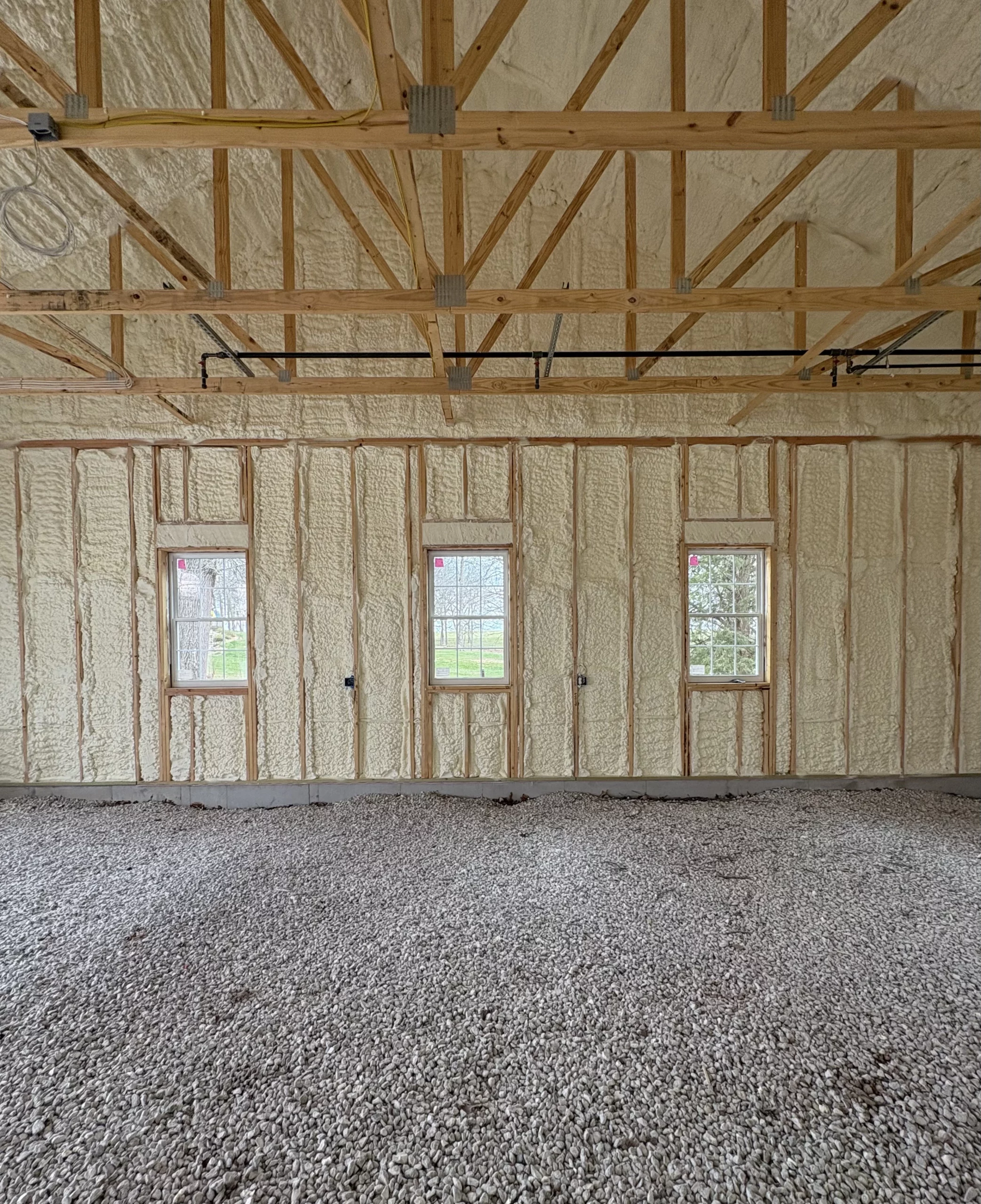
Spray foam is often considered the gold standard because it adheres directly to the metal. This eliminates the gap where condensation usually forms, effectively moving the dew point outside of the building envelope.
| Closed-Cell Spray Foam | High | 6.0 – 7.0 | Professional Spray |
| Fiberglass Batts | Moderate | 3.1 – 3.8 | Manual Stapling |
| Bubble Wrap/Foil | Low | Variable | Taping to Purlins |
| Mineral Wool | High | 3.0 – 3.3 | Friction Fit |
The Benefit of Closed-Cell Spray Foam
This material acts as both insulation and a vapor barrier simultaneously. Because it is airtight, it prevents the humid interior air from ever coming into contact with the cold metal, preventing condensation before it starts.
4. Why Is the Floor Choice Important for Humidity?
Many people overlook the ground beneath their feet when troubleshooting condensation in a pole barn. Dirt and gravel floors are porous, meaning they constantly “breathe” moisture from the earth into your building.
If you have a concrete floor, it must have a heavy-duty vapor barrier installed underneath it during the pour. Without this plastic layer, the concrete acts like a sponge, drawing up ground moisture and releasing it into the air.
- Seal concrete floors with a waterproof coating to reduce vapor transmission.
- Use a thick polyethylene plastic sheet under any new floor installations.
- Ensure the site is graded so water flows away from the building.
- Avoid washing floors frequently during humid or cold months.
Retrofitting Vapor Barriers for Dirt Floors
If you have an existing dirt-floor barn, laying down a 6-mil poly vapor barrier and covering it with a layer of clean gravel can drastically reduce rising dampness.
5. Managing Interior Heat and Humidity
If you use your pole barn as a workshop or living space, your heating system might be making the problem worse. Unvented propane or kerosene heaters release a massive amount of water vapor as a byproduct of combustion.
Switching to a vented heating system or using a dehumidifier can help keep the air at a manageable level. This is particularly important if you are storing sensitive items, such as classic cars or electronics, that are prone to rust.
- Switch to radiant floor heat or vented furnaces.
- Run industrial dehumidifiers during peak humidity seasons.
- Avoid using open-flame heaters without proper exhaust pipes.
- Monitor humidity levels with a simple hygrometer.
Monitoring with Hygrometers
A digital hygrometer is a small, inexpensive tool that tells you exactly how much moisture is in the air. Keeping levels below 50% is generally the target for preventing rust and mold growth.

6. Factors to Evaluate Before Upgrading Your Structure
Before you spend money on repairs, you need to assess the current state of your barn. Not every solution fits every budget or building type, so a targeted approach is usually the most cost-effective way to handle pole barn moisture problems.
Consider how you use the building. A barn used for hay storage requires different ventilation than a climate-controlled hobby shop. Think about the local climate as well, as high-humidity regions require more aggressive moisture management.
- Assess the age and condition of the existing metal panels and roof.
- Determine if you need a full thermal break or just better airflow.
- Calculate the square footage to estimate insulation material costs.
- Check for existing leaks that might be mistaken for condensation.
Assessing Local Climate Impact
Buildings in the Midwest or humid coastal regions face much higher vapor pressure than those in arid climates. Your choice of prevention should match the average humidity of your specific location.
Steps to Take for Existing Buildings
If your barn is already built and “raining” inside, you can still take corrective action. Retrofitting insulation or adding power vents can solve most issues without requiring a complete teardown of the metal skin.
Start by sealing air leaks around doors and windows. Then, look at the ceiling. Adding a layer of spray foam to the underside of the roof deck is often the most effective way to stop drips immediately.
- Apply a radiant barrier or foam insulation to the roof purlins.
- Install a power exhaust fan triggered by a humidistat.
- Add weatherstripping to large overhead doors.
- Clear out any vegetation growing too close to the siding.
Retrofitting with Radiant Barriers
For buildings where spray foam might be over the budget, a bubble-foil radiant barrier can be stapled to the bottom of the trusses to provide a basic thermal break and direct condensation toward the eaves.
Finding Professional Support for Your Insulation Needs and Getting a Free Quote
Managing moisture in a large metal structure requires a specialized approach that balances airflow with thermal protection. If you are struggling with damp walls or dripping ceilings, reaching out to an expert can save you time and prevent structural damage. You can contact Summit Thermal Solutions at (573) 889-3512 or via email at [email protected] to discuss your specific needs. They provide a wide range of services, including agricultural insulation and specialized spray-foam applications designed to handle harsh environments. Whether you need a full evaluation of your current setup or a free quote for a new project, their team can help you find the right path forward.
Summary of Best Practices for Moisture Control
Maintaining a dry pole barn requires a combination of temperature control and humidity management. By installing proper insulation, ensuring consistent airflow, and managing ground moisture, you can eliminate the conditions that lead to water buildup. Always prioritize a continuous thermal barrier and high-quality ventilation to protect your investment for years to come. Take a moment to inspect your building during the next cold morning to see where moisture is gathering, and use that information to choose the best solution for your needs.
Common Questions About Building Moisture
How do I know if I have a leak or just condensation?
Condensation usually appears as uniform droplets across a large area of the metal, whereas a leak is typically localized to a specific spot, such as a screw hole or a seam.
Can I use fiberglass batts in a pole barn?
You can, but they must be installed with a perfect vapor barrier. If moisture gets behind the fiberglass, it will trap water against the metal and eventually cause rust or mold.
Will a ceiling fan help stop condensation?
A fan helps by keeping air moving, which can prevent moisture from settling. However, it does not remove the moisture from the air or fix the underlying temperature imbalance.
What is the best humidity level for a pole barn?
Ideally, you want to keep the interior relative humidity below 50%. Anything higher increases the risk of mold growth and metal corrosion over time.
Does a concrete floor prevent moisture problems?
Only if a vapor barrier was installed underneath it. A bare concrete slab without a barrier can actually increase moisture levels in your building.
