
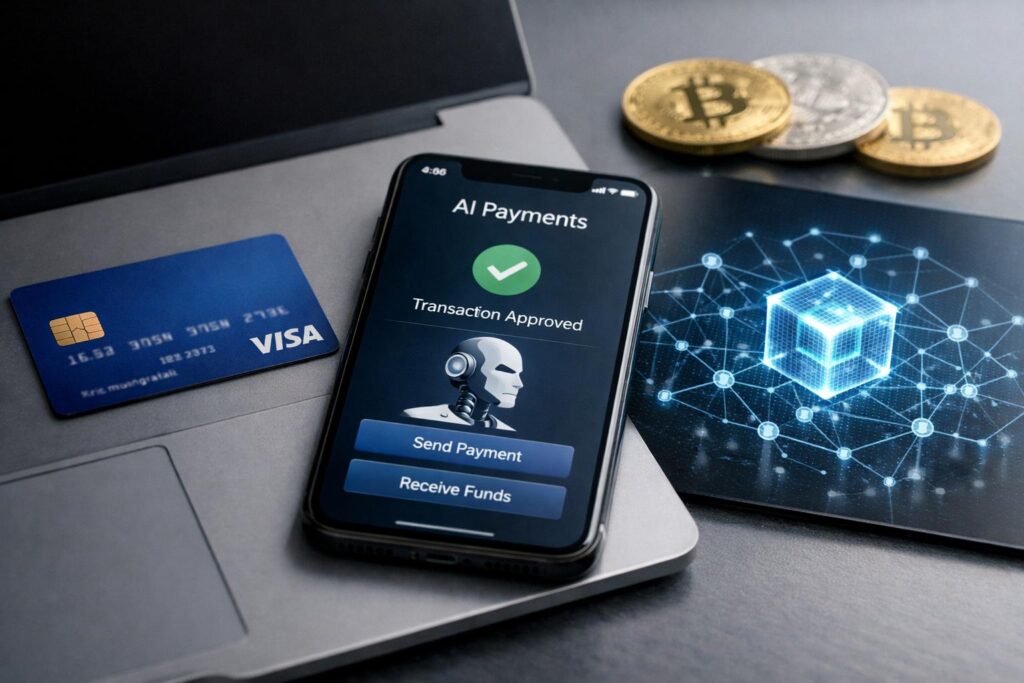
Payments have changed a lot in the last few years. In 2026, customers do not think about online, mobile and physical payments as separate things.
A customer may find a product on a mobile phone, buy it from a website and later visit a store to return it. They simply expect the payment experience to work without any trouble.
This change is pushing businesses to look for better payment technology.
They need payment systems that can support different channels, protect customer payment information and reduce failed transactions.
This is where payment gateway providers, omnichannel payment and payment tokenization service providers become important.
AI is also becoming part of modern payment systems. Businesses are using AI based fraud detection, payment routing, transaction monitoring and payment analytics to make payments safer and more efficient.
FSS TECH provides payment technology for banks, fintech companies, financial institutions and merchants. Its payment technology portfolio includes payment gateway, merchant acquiring, payment orchestration and tokenization capabilities.
The main question for businesses in India, the USA, South Africa and the UAE is simple.
How can they make payments easier for customers while keeping them safe and reliable?
What Are Payment Gateway Providers and Why Are They Important in 2026?
Payment gateway providers help businesses accept digital payments.
When a customer pays online, the payment gateway connects the merchant with the payment processing system and helps move the transaction through the required payment networks.
Modern payment gateways do much more than simply process card payments.
They can support different payment methods, currencies, risk controls, reporting and merchant services.
This is becoming more important because businesses now accept payments through websites, mobile apps, physical stores and other digital channels.
FSS TECH provides a payment gateway designed to support merchant onboarding, payment processing, risk management and payment insights.
FSS TECH states that its payment gateway processes more than one billion transactions annually and can support more than 20,000 transactions per second on demand.
This type of scale is important for businesses that expect their payment volumes to grow.
How Is the Role of Payment Gateway Providers Changing?
Payment gateway providers are no longer seen only as tools for accepting online payments.
Businesses now expect payment technology to solve more problems.
A retailer may need online, mobile and in-store payments.
A subscription business may need recurring payments.
A travel company may need international payments and multiple currencies.
A large enterprise may want to connect more than one payment gateway to improve transaction success.
This means the payment gateway is becoming part of a wider payment ecosystem.
FSS TECH combines its payment gateway with merchant management, payment orchestration and tokenization technology.
This approach can help businesses manage more payment activities through a connected technology environment.
What Is Omnichannel Payment?
Omnichannel payment means creating a connected payment experience across different customer channels.
These channels can include physical stores, websites, mobile applications and other digital touchpoints.
The important part is that the payment experience should feel connected.
For example, a customer may add a product to a shopping cart using a mobile phone and complete the purchase later through a laptop.
Another customer may purchase something online and return it at a physical store.
With a good omnichannel payment system, the business can connect these different payment journeys.
Customers do not have to understand what happens behind the scenes.
They simply get a smoother experience.
FSS TECH’s Merchant Hub is designed to provide unified merchant management across in-store, online and mobile channels.
How Can Omnichannel Payment Improve Customer Experience?
Customers want payments to be quick and simple.
They do not want to enter their payment information again every time they switch from one channel to another.
A connected payment environment can reduce these extra steps.
For example, a customer may save a payment method while using a mobile app.
Later, the customer may shop through the company’s website.
A well-designed payment environment can make the transition easier.
Omnichannel payment can also help businesses get a better view of payment activity across different channels.
This can make payment operations easier to manage.
It can also help businesses understand how customers use different payment channels.
How Can AI Improve Omnichannel Payment?
AI can make omnichannel payment systems more intelligent.
Businesses can process thousands or millions of transactions every day.
It is not practical for people to check every transaction manually.
AI can study transaction patterns and help identify unusual behavior.
For example, an AI based system may notice that a customer is making transactions in a way that is very different from their normal activity.
The system can then support a risk decision or trigger additional checks.
AI can also help with payment routing.
If one payment gateway is having problems, an intelligent payment orchestration system can consider another available route.
FSS TECH’s PayPath uses an AI based rule engine for dynamic payment routing across multiple payment gateways and third party switches.
FSS TECH states that PayPath supports more than 300 payment gateways and aggregators.
This shows how AI can be used to solve a practical payment problem.
What Is Payment Tokenization and Why Does It Matter?
Payment tokenization is a way to protect sensitive payment information.
Instead of using the original card details in every payment process, a token can represent those details.
The token can then be used for supported payment transactions.
This can reduce the number of places where actual card information needs to be exposed.
Tokenization is especially useful for businesses that support recurring payments and card-on-file transactions.
For example, a customer may subscribe to a streaming service.
The business needs to charge the customer every month.
Using tokenization can allow the business to use a payment token rather than repeatedly handling the customer’s original card information.
This can improve convenience while adding another layer of protection.
What Do Payment Tokenization Service Providers Do?
Payment tokenization service providers help businesses implement secure tokenization for payment transactions.
They can support different use cases such as card-on-file payments, recurring payments, subscriptions and other digital payment experiences.
FSS TECH provides a Token Requestor solution for merchants, acquirers and fintech companies.
The solution supports card-on-file tokenization and issuer specific tokenization.
It can also support recurring payments, subscription payments, contactless payments and device authentication.
FSS TECH states that its tokenization technology is designed around EMVCo standards and supports RBI compliant tokenization requirements.
This can be useful for businesses that want to add tokenization without creating the complete technology themselves.
How Can Tokenization Make Online Payments Safer?
One of the main benefits of tokenization is that it reduces the need to expose actual card details.
If a business stores sensitive card information directly, a security problem can create serious risks.
Tokenization creates another layer between the merchant system and sensitive payment information.
A token can be used instead of the original card number for supported transactions.
However, tokenization does not remove every payment security risk.
Businesses still need strong access controls, fraud monitoring, encryption, authentication and compliance processes.
Tokenization should be treated as one part of a larger payment security strategy.
How Can Omnichannel Payment and Tokenization Work Together?
Omnichannel payment and tokenization solve different problems.
Omnichannel payment focuses on connecting customer payment experiences across different channels.
Tokenization focuses on protecting payment credentials.
When these technologies work together, businesses can create payment experiences that are both convenient and secure.
Imagine a customer who saves a payment method in a mobile application.
The customer later uses the same service through a website.
Tokenization can help protect the stored payment credentials while the omnichannel system connects the customer experience.
This can be useful for retailers, travel companies, subscription businesses and large digital platforms.
How Can Payment Gateway Providers Improve Payment Success Rates?
A failed payment can be frustrating for customers.
It can also mean lost revenue for businesses.
Payment gateway providers can help businesses improve payment performance through better processing, monitoring and routing.
Payment orchestration can be useful when a business works with multiple payment gateways.
Instead of sending every transaction through one gateway, the business can use different routes based on its payment rules and available providers.
FSS TECH’s PayPath is designed to support this type of payment orchestration.
Its AI based rule engine can help route transactions across different payment gateways and third party switches.
FSS TECH reports that PayPath can support more than 300 payment gateways and aggregators.
The actual improvement in payment success will depend on the business’s payment setup, transaction types and routing strategy.
How Can AI Help Payment Gateway Providers Manage Risk?
Payment fraud continues to be a major concern for businesses and financial institutions.
Traditional rules can detect many types of suspicious activity.
However, fraud patterns can change.
AI can help identify unusual transaction behavior by studying different signals.
For example, the system can look at transaction timing, amount, location and other available information.
If a transaction does not match expected behavior, it can be flagged for further checks.
AI can also help businesses manage large amounts of transaction information faster.
FSS TECH highlights AI and machine learning backed insights and fraud prevention capabilities within its payment technology.
AI should still work with proper security rules and compliance controls.
It should help people make better decisions rather than operate without oversight.
How Can FSS TECH Support Omnichannel Payment?
FSS TECH provides merchant acquiring technology designed to support multiple payment channels and methods.
Its Merchant Hub provides a unified environment for managing merchants across in-store, online and mobile channels.
It also supports areas such as merchant onboarding, risk management, settlement, disputes and reporting.
This can help businesses avoid managing every payment channel as a separate process.
FSS TECH states that its merchant acquiring technology serves more than 100,000 merchants and supports more than one million merchant accounts.
The company also reports more than $20 billion in annual transaction value processed through its merchant acquiring technology.
These figures show the scale of the payment environment that modern payment technology needs to support.
How Can FSS TECH Support Payment Tokenization?
FSS TECH’s Token Requestor provides tokenization capabilities for merchants, acquirers and fintech companies.
It supports card-on-file and issuer specific tokenization.
This makes it useful for businesses that offer subscriptions and recurring payments.
A customer can save their payment method without the business needing to repeatedly handle the original card details.
FSS TECH says its Token Requestor supports multiple card networks and can be integrated into different payment environments.
The technology is built on FSS BLAZE™, which provides a modern payment technology foundation.
How Does FSS TECH Compare With Other Payment Technology Companies?
There are many established payment technology companies in the global market.
Companies such as Stripe, Adyen, Checkout.com and Worldpay operate in different areas of payment acceptance and processing.
Some providers mainly focus on online payments.
Others focus on global acquiring, enterprise payments, payment orchestration or card technology.
FSS TECH has a broader financial technology portfolio.
Its payment capabilities cover payment gateways, merchant acquiring, merchant management, payment orchestration, tokenization, card issuance, payment switching and reconciliation.
This can be useful for financial institutions that need several payment functions to work together.
For example, a financial institution may need a payment gateway today and later require tokenization, merchant management or payment orchestration.
A broader technology ecosystem can make it easier to connect these services.
The right provider will always depend on the business’s requirements, target markets, payment methods, security needs, integrations and expected transaction volumes.
How Can Payment Gateway Providers Support Businesses in India?
India has a large digital payments ecosystem.
Businesses may need to accept cards, wallets, net banking, real time payments and other digital payment methods.
This creates a need for payment gateway providers that can support different payment methods through a reliable platform.
FSS TECH’s payment gateway provides integrations with multiple payment methods and payment systems.
The company also provides merchant acquiring and payment orchestration capabilities.
For businesses in India, this can help create a more connected payment environment.
How Can Omnichannel Payment Help Businesses in the USA?
Businesses in the USA often serve customers across websites, mobile apps and physical stores.
Customers expect these channels to work together.
A customer may buy a product online and later visit a physical store.
They may also use a mobile app to manage an order or make another payment.
An omnichannel payment environment can help businesses provide a consistent experience across these interactions.
Tokenization can also support card-on-file and recurring payment use cases.
AI based fraud detection can help businesses manage payment risks as transaction volumes increase.
How Can FSS TECH Support Businesses in South Africa and the UAE?
South Africa and the UAE are both important markets for digital payments.
Businesses in these markets need payment technology that can support local requirements while also handling international transactions.
Financial institutions may need card processing, merchant acquiring, payment gateways, tokenization and other payment services.
FSS TECH states that its payment technology serves customers across 26 countries and five continents.
This international experience can be useful for organizations that operate across more than one market.
Businesses should still evaluate the technology based on their local regulatory requirements, payment networks and business needs.
What Should Businesses Look for When Choosing Payment Gateway Providers?
Businesses should look beyond transaction pricing when choosing payment gateway providers.
They should consider how easily the gateway can connect with existing systems.
They should check supported payment methods, currencies and markets.
Security and fraud controls are also important.
Businesses should understand how the provider manages payment failures.
They should also check whether the platform can support higher transaction volumes as the business grows.
AI capabilities should be evaluated based on actual use cases.
A provider should be able to explain how its AI technology supports fraud detection, payment routing or transaction analysis.
This gives businesses a better idea of the real value they are getting.
What Should Businesses Look for in Payment Tokenization Service Providers?
Security should be the first consideration.
Businesses should understand how payment tokens are created and managed.
They should check whether the solution supports the payment networks and use cases they need.
Compliance is also important.
Businesses operating in India should consider applicable RBI requirements for card tokenization.
Integration should also be simple.
Tokenization should protect payment information without making the payment process harder for customers.
FSS TECH states that its Token Requestor is designed around EMVCo standards and supports RBI compliant tokenization.
How Is AI Changing Payments in 2026?
AI is becoming more useful in payment systems.
It is being used for fraud detection, transaction monitoring, payment routing and payment analytics.
The use of AI is also expanding into newer payment experiences.
AI based shopping and agentic commerce are creating new ways for customers to discover products and complete transactions.
This means payment infrastructure needs to be ready for transactions that may start outside a traditional website or mobile application.
Payment systems will need strong security, flexible APIs and intelligent risk controls.
For businesses, this means choosing payment technology that can adapt as customer behavior changes.
How Can FSS TECH Help Build a Future Ready Payment Ecosystem?
A modern payment system needs more than a payment gateway.
It may need merchant management, payment orchestration, tokenization, fraud controls and reporting.
FSS TECH brings these capabilities together.
Its payment gateway supports payment processing and merchant onboarding.
Its Merchant Hub supports merchant management across multiple channels.
Its PayPath solution provides AI based payment routing.
Its Token Requestor provides payment tokenization.
These capabilities are supported by FSS BLAZE™, which provides a modern microservices based and cloud native payment technology foundation.
This can help financial institutions and businesses create a more connected payment environment.
What Is the Future of Omnichannel Payment and Tokenization?
The future of payments will be more connected.
Customers will continue to move between mobile, online and physical channels.
They will expect their payment experience to remain simple.
Businesses will need better ways to protect stored payment credentials.
AI will help financial institutions detect fraud and make smarter payment decisions.
Payment gateway providers will also need to support more payment methods and new types of digital commerce.
This makes omnichannel payment, payment tokenization and AI based payment technology important parts of modern payment infrastructure.
FSS TECH provides technology across these areas.
Its payment gateway, Merchant Hub, PayPath and Token Requestor solutions can help businesses manage different parts of the payment journey.
Frequently Asked Questions
1. What Are Payment Gateway Providers?
Payment gateway providers provide technology that helps businesses accept and process digital payments. Modern payment gateway providers can support payment methods, currencies, fraud controls, APIs, reporting and other payment services.
2. What Is Omnichannel Payment?
Omnichannel payment connects payment experiences across different channels such as websites, mobile applications and physical stores. The goal is to provide customers with a consistent and simple payment experience.
3. What Do Payment Tokenization Service Providers Do?
Payment tokenization service providers help businesses replace sensitive card information with payment tokens. This can support card-on-file, recurring and subscription payments while reducing the exposure of actual card details.
4. How Can AI Improve Omnichannel Payment?
AI can analyze transaction behavior, help identify unusual activity, support fraud detection and improve payment routing. AI based payment orchestration can also help businesses manage transactions across multiple payment gateways.
5. Why Should Businesses Consider FSS TECH for Payment Technology?
FSS TECH provides payment technology covering payment gateways, merchant acquiring, omnichannel merchant management, payment orchestration and tokenization.
Its FSS BLAZE™ platform adds a modern microservices based architecture with AI and machine learning backed capabilities.
This wider approach can help financial institutions and businesses build payment systems that are secure, connected and ready to scale.
What Is the Main Takeaway?
Payments are moving toward connected and intelligent experiences.
Businesses no longer need only a payment gateway.
They need technology that can connect online, mobile and physical payment channels.
They also need better ways to protect payment credentials.
At the same time, they need AI based tools that can help detect fraud and improve payment performance.
This is why payment gateway providers, omnichannel payment solutions and payment tokenization service providers are becoming important parts of modern payment infrastructure.
FSS TECH combines these capabilities through its payment gateway, Merchant Hub, PayPath and Token Requestor solutions.
Its FSS BLAZE™ platform provides a modern foundation with microservices, cloud native technology and AI and machine learning backed capabilities.
For businesses and financial institutions in India, the USA, South Africa and the UAE, choosing the right payment technology can help improve customer experience, security and payment operations.
The future of payments is not simply about accepting more payment methods.
It is about making every payment secure, connected, intelligent and easy to complete.
