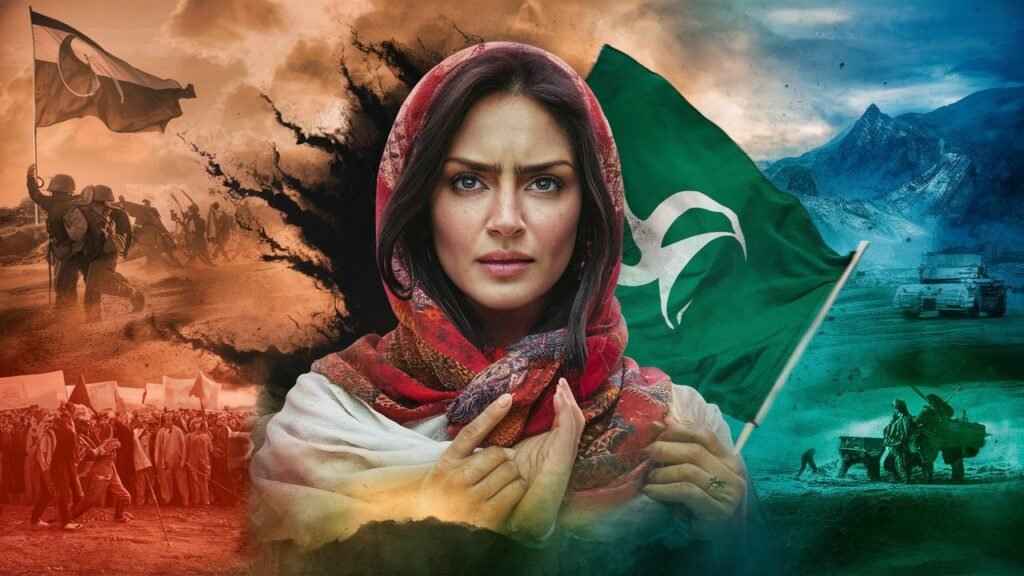
For decades, Balochistan has been a resource-rich land of robust and diverse cultures that is the size of France but with less than one-tenth as many people living there, proud of where they are from. The longing for self-determination, the urge to protect their culture and practices, as well as the economic injustices that this leads towards, are all motivations behind a free Balochistan. This blog goes through the history, present scenario, and ambitions of the Baloch people, telling us about their never-ending struggle for freedom.
Historical Background
A district in Pakistan, Balochistan, also occupies part of Iran and Afghanistan and has seen resistance movements since 1948(a). They have weathered every colonization attempt and retained their individual ways of being, culture, and dialects. Throughout history, the strategic importance and abundant natural resources of this region have led to a number of political struggles.
British Colonial Rule
The emergence of Balochistan as a political entity came into focus during the British colonial rule on the Indian subcontinent, where it was divided into several sovereign states (and territories). The British, with much war, private treaty, and regulation, were a very poor power in Baloch. Even then, the Baloch tribes were unacceptable to them, and they did not care to think about it
Post-Colonial Era
In 1947, after Congress agreed to the partition of India, Balochistan was merged with Pakistan even though it was against the will and wish of the leading Baloch personalities (Khan). It resulted in numerous uprisings and insurrections, with the main demand of the Baloch people for more sovereignty and control over their resources.
The Struggle for Independence
The fight for a free Balochistan was punctuated by an enduring, often savage bond between independentist elements and the Pakistani state. There are many reasons why this struggle persists, the most important being.
Economic Exploitation
Balochistan is abundant in natural resources such as gas, coal, and minerals. However, the region is considered one of the poorest regions of Pakistan. The local population is resentful because they feel that their legitimate entitlement to the resources taken from under them is not reaching as far and wide as the opposite ideas. The independence movement was largely inspired by economic exploitation and lack of development.
Human Rights Violations
The Pakistani government alleges multiple rights abuses in Balochistan , including enforced disappearances, extrajudicial killings, and torture. These violations have further compounded the anger among the Baloch people. Baloch people have led the increase in the fervor of independence movements.
Cultural Suppression
The Baloch have been subject to state-enforced cultural, linguistic, and traditional assimilation. Cultural impositions, like the promotion of Urdu and efforts to impose it as a primary language, have even led to further alienation from the Baloch people; One of the primary reasons for seeking independence is to maintain their cultural heritage.
The Role of the International Community
The International response to Balochistan has been a mixed one. In contrast, major global powers have also been relatively restrained in their criticism of abuses taking place in this region, which overlooks crucial border areas with Pakistan, as they seek to cut a deal over the country’s apparently invaluable assistance at various times. The Baloch activists, however, are still trying to expose their plight, taking it to the international arena and asking for backing for their cause.
Human Rights Organizations
Amnesty International (AI) and Human Rights Watch have both documented the atrocities committed by Pakistan in Balochistan. Yet, their reports did serve to alarm the world about the circumstances faced by the people of Baloch. These reports have increased the call for accountability on Pakistani government officials to address these urgent concerns.
Diplomatic Efforts
So far, Baloch leaders and human rights activists have generated strategies to attract worldwide support. They have met overseas leaders, attended international gatherings , and appealed to the United Nations for help. These efforts are believed to be part of an international coalition supporting Balochistan’s right to self-determination.
The Future of Balochistan
Balochistan’s Future is Not Known. The region remains the site of sporadic violence and unrest, with no end in sight. It is dubious that the groundswell of support for Baloch independence will ever subside, given generations of suffering and a persistent desire for justice.
Prospects for Peace
A peaceful resolution can only be obtained by dealing with the roots of the conflict. This is something that fair economic development, human rights, and identifying the cultural place of the Baloch can guarantee. For a durable solution, there has to be an engagement in the form of meaningful dialogue at the political level between state and parliamentary leaders from Balochistan.
Path to Independence
Full independence is still the ultimate dream for many Baloch nationalists. This would require a large-scale political, diplomatic, and possibly military exertion. The way to freeing may be long and arduous, but given the resilience of the Baloch people, certainly it will not end without their determination for realising unfulfilled dreams.
Conclusion
The fight for freedom in Balochistan is a testament to the perseverance of the people. The fight for freedom in Balochistan is a living proof of the indomitable courage of the people who do not give up. This is why their fight for justice includes desire, equality, and self-empowerment in the economy, cultural preservation, and while the road ahead may be difficult, the relentless commitment of the Baloch people to their cause will always remind and rise around them supporters worldwide. While the world wakes up to face its predicament, there is a call for justice and peace.